
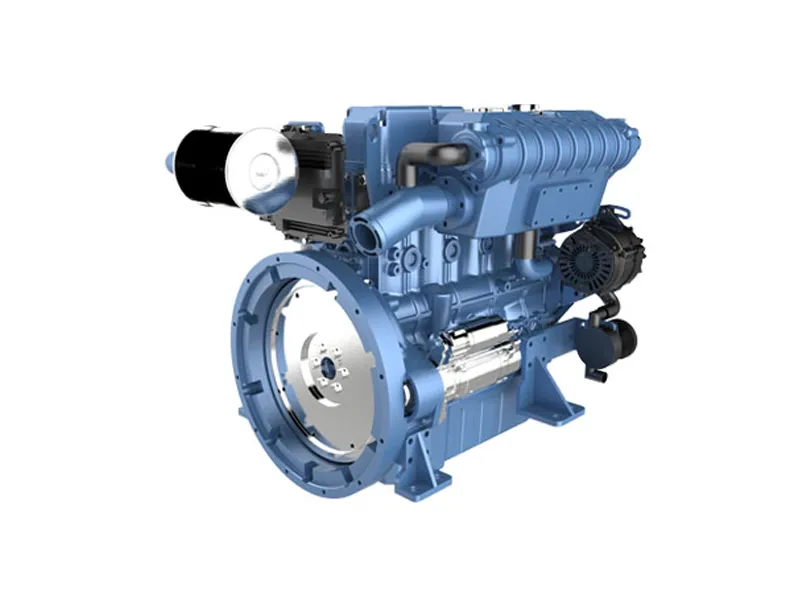
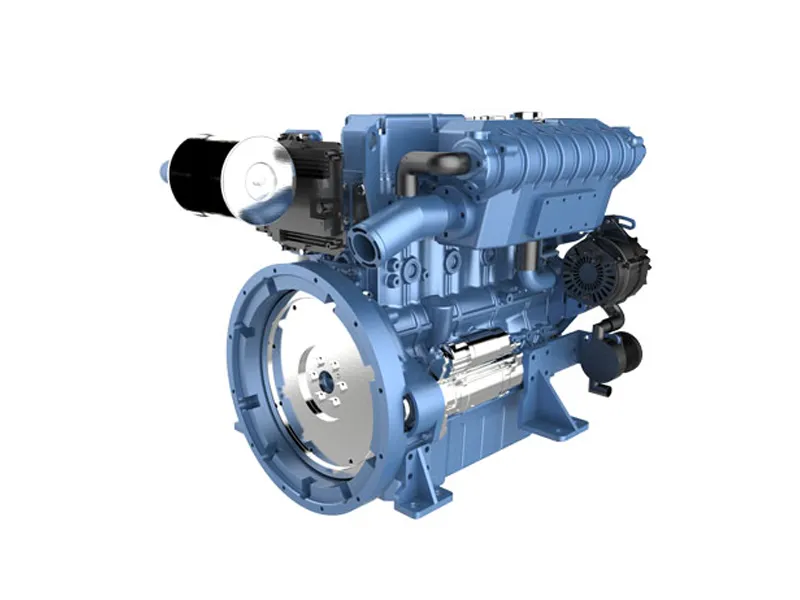
WP2.3N Series Marine Engine

WP2.3N series marine diesel engine

Weichai WP2.3N Series Marine Diesel Engine — 40 to 95 kW

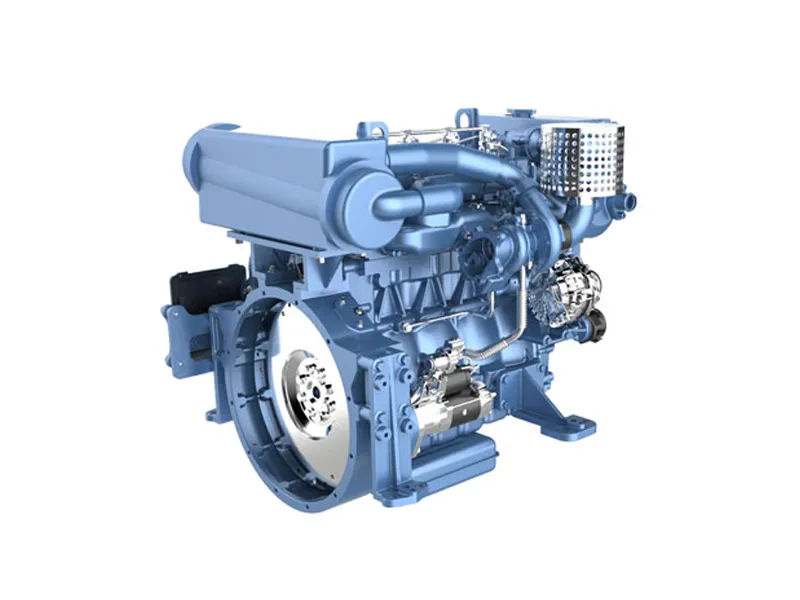
The WP2.3N is a 2.3-litre, four-cylinder marine diesel engine built on Weichai’s N-series platform. It covers a power range of 40–95 kW across 1,800–3,200 rpm, with a rated torque reserve of 34% and a minimum fuel consumption rate of 195 g/kW·h. The engine uses a high-pressure common rail (HPCR) fuel system and is designed for continuous-duty propulsion in small and medium workboats, fishing vessels, and passenger ferries.

This page covers the full WP2.3N model portfolio, technical specifications, vessel fitment guidance, and a comparison against common alternatives in the same power class.

Parameters Table

ParameterValue
TypeFour-stroke, water-cooled, in-line, turbocharged and aftercooled
Number of cylinders4
Bore × stroke89 × 92 mm
Displacement2.3 L
Rated power range40–95 kW (54–130 Ps)
Speed range1,800–3,200 r/min
Torque reserve34%
Minimum fuel consumption rate195 g/kW·h
Oil consumption rate≤0.1 g/kW·h
Oil change interval≥500 h
Overhaul interval12,000 h
Idle speed750 r/min
Noise (SPL @ 1 m)≤96 dB(A)
Idle noise74 dB(A)
Rotation (facing flywheel)Counter-clockwise
Net weight310 kg
Dimensions (L×W×H)854 × 688 × 822 mm
Fuel systemHigh-pressure common rail (HPCR)
Emission standardChina Stage II / IMO II (configuration-dependent)
Fuel typeMGO

Model Portfolio Table

ModelPower kW/PsSpeed r/minPower RatingPrimary Use
WP2.3NC54-18E22040 / 541,800P1 (continuous)Light commercial, auxiliary
WP2.3NC68-18E22050 / 681,800P1Small fishing, workboats
WP2.3NC82-18E22060 / 821,800P1Fishing vessels, ferries
WP2.3NC102-21E22075 / 1022,100P1Workboats, passenger craft
WP2.3NC110-25E22081 / 1102,500P1Higher-speed commercial craft
WP2.3NC130-32E22095 / 1303,200P3 (intermittent)Patrol, fast response vessels


Remark: The delivery date of products marked with * shall be subject to the reply of the manufacturer. Product parameters and model portfolio are for reference only. Please contact relevant personnel for official information on delivery time and fishing boat model portfolio.

Why Operators Choose the WP2.3N

12,000 h

Overhaul interval

The block, cylinder head, pistons, and bearings are a clean-sheet N-series design. Components are sourced through Weichai’s qualified supplier chain and assembled in a dust-free, temperature-controlled facility. Bench testing covers the turbocharger, crankshaft, heat exchanger, intercooler, and starter under load.
195 g/kW·h

Fuel consumption — minimum

In common operating ranges, the WP2.3N consumes 4–8 g/kW·h less than comparable engines in its displacement class. The economic speed band runs from 1,300 to 2,600 rpm — wider than most competing 2.3-litre marine diesels. Oil change interval is 500 hours.

134%

Rated torque at 50% rated speed

Torque at low and mid speeds matters for vessels that operate under varying load — trawling, pushing, or running at part throttle for extended periods. There is no power loss at altitudes up to 2,000 metres under normal operating conditions.

74 dB(A)

Idle noise

The gear chamber cover, cylinder head cover, and closed flywheel housing are designed to reduce noise leakage. A reinforced block and offset piston pin structure cut vibration compared with earlier designs. Overall noise at 1 metre is ≤96 dB(A).

Marine-specific fitment

Optional seawater pump · damping pads · connected panel

A horizontal filter layout reduces engine height for tight engine rooms. The engine accepts and outputs multiple control signals for automated vessel systems.

WP2.3N vs. Comparable Marine Diesels

 WP2.3NTypical 2.0–2.5 L marine diesel
Displacement2.3 L2.0–2.5 L
Max power95 kW60–80 kW (common)
Min fuel consumption195 g/kW·h200–207 g/kW·h
Torque reserve34%20–25% (typical)
Overhaul interval12,000 h8,000–10,000 h
Oil change interval500 h250–300 h
Idle noise74 dB(A)78–82 dB(A)

The comparison is based on published specifications for engines in the same displacement and power class. Actual figures depend on installation, load profile, and fuel quality.

Compared with Japanese and European engines in this range, the WP2.3N’s main advantages are a wider economic speed band and a longer oil change interval. Its main trade-off is service network coverage — Weichai’s dealer footprint is strongest in Asia, Africa, and the Middle East, and thinner in Western Europe and North America.

Vessel Fitment: Where the WP2.3N Works Best

Sized for vessels roughly 7–15 metres in length that need dependable propulsion without excessive weight or engine-room footprint.

Fishing vessels

Trawlers, gillnetters, and small longliners in the 8–14 metre range.

  • 1,800 rpm40–60 kWDisplacement hulls running at 7–9 knots
  • 2,100 rpm75 kWSemi-displacement fishing boats that need more speed to reach grounds quickly

Workboats

Harbour tugs, line-handling boats, and aquaculture service vessels.

  • Low-end torqueHolds rpm under sudden load changes without stalling or excessive smoke

Passenger ferries & water taxis

Small passenger boats carrying 20–40 people on sheltered routes.

  • 2,500 rpm81 kWSuits small passenger boats on sheltered routes
  • 74 dB(A) idleA practical advantage for passenger comfort

Auxiliary power

Marine generator sets for onboard electrical loads.

  • 1,800 rpmStandard choice for 50 Hz gensets
  • 2,500 rpm60 Hz gensets

Product advantages

  • High torque reservation
  • Minimum fuel consumption 195g/kW·h
  • Overhaul period of 12000 h
  • Weichai brand new N series platform products, the body, cylinder head, piston, bearing shell and other structural parts of a new design
  • Adopt high-quality Weichai system suppliers and develop in accordance with the high reliability requirements of large-displacement engines
  • Dust-free, constant temperature assembly workshop, high precision test bench
  • High torque in medium and low speed range, continuous output and strong power
  • Precise control by electronic control unit, high injection pressure and superior acceleration performance
  • 50% rated speed can reach 134% rated torque 
  • Using electronic control high pressure common rail technology, accurate control of fuel injection, economic operation area is wider
  • Minimum fuel consumption rate 195g/kW•h
  • Oil replacement cycle ≥500h
  • Customized design for lower fuel consumption
  • Electronic control multiple injection, greatly reduce vibration and noise, idle noise 74dB (A)
  • NVH optimization matching of the whole machine, gear chamber cover, cylinder cover, closed flywheel housing noise reduction design, reduce noise leakage
  • Adopt body stiffening plate, piston pin offset structure, the vibration of the whole machine is better than that of competing products
  • Weichai intelligent cloud platform, big data processing, remote diagnosis
  • Intelligent terminal, maintenance reminder
  • Horizontal filter arrangement, reduce the height of the machine, compact structure
  • Optional Internet intelligent instrument, installed sea water pump, damping pad and other configurations, to meet the needs of different customers 

Maintenance & Service

Oil & filter change

Every 500 hours. Use oil meeting the viscosity and API classification specified in the operator manual. The oil filter element is a replaceable paper type — you change the element, not the entire housing. This cuts consumable cost per service.

Fuel system

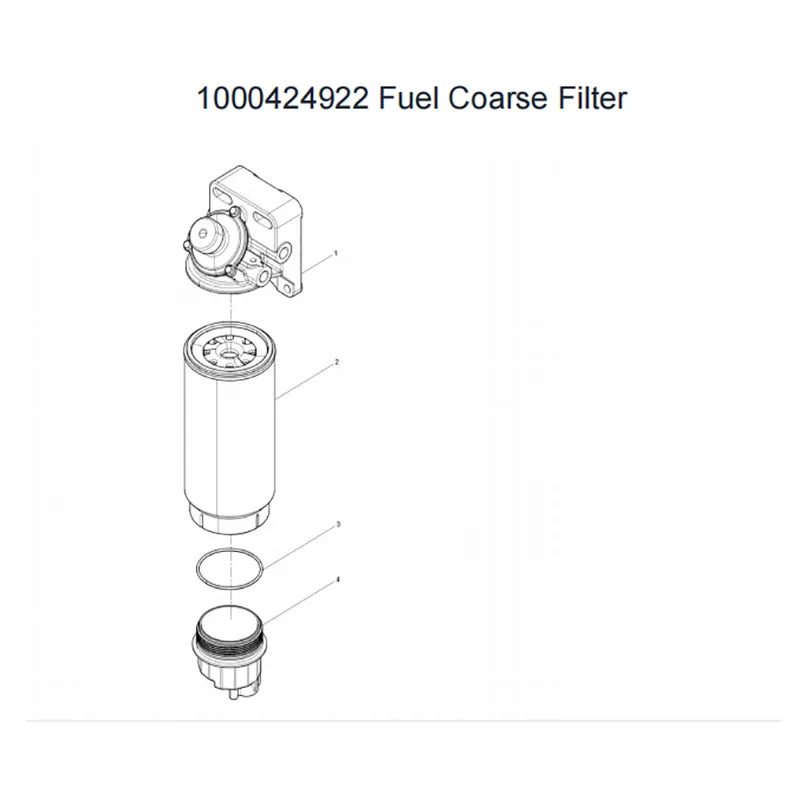
The HPCR system requires clean fuel. Install a water-separating pre-filter and drain it daily. Contaminated fuel is the most common cause of injector failure on common rail marine engines.

Seawater pump impeller

Inspect at 500 hours, replace annually or at 1,000 hours, whichever comes first. A failed impeller leads to overheating within minutes.

Anodes

Heat exchanger and seawater pump anodes should be checked at every oil change. Replace when 50% consumed.

Winter lay-up

Flush the raw water circuit with fresh water, change engine oil, and fog the cylinders if the engine will sit more than three months.

Frequently Asked Questions

What is the fuel consumption of the WP2.3N at cruising speed?

At the economic speed band (1,300–2,600 rpm), expect 195–210 g/kW·h depending on load and propeller match. A 60 kW continuous load typically burns 12–13 litres per hour of MGO.

Can I run the WP2.3N continuously at full power?

The P1-rated models (40–81 kW) are designed for continuous duty. The P3-rated 95 kW model at 3,200 rpm is for intermittent use — typically limited to 1 hour in every 6, per standard marine rating definitions.

How often does the WP2.3N need a major overhaul?

12,000 hours under normal operating conditions with specified maintenance. Overhauls involve cylinder head service, piston and ring replacement, and bearing inspection.

What fuel quality does the WP2.3N require?

MGO (marine gas oil) per ISO 8217. The common rail system is sensitive to water and particulate contamination — a 10-micron final filter and daily water draining are essential.

Does the WP2.3N come with a warranty?

Standard warranty terms vary by market and application. Contact us for the warranty schedule applicable to your region and vessel type.

Can the WP2.3N drive a generator?

Yes. The 1,800 rpm models are commonly paired with 50 Hz generators; 2,500 rpm models with 60 Hz. Generator ratings differ from propulsion ratings — consult us for genset-specific power ratings.

Recommended products

Chat with us
Chat with us
Questions, doubts, issues? We're here to help you!
Connecting...
Please leave your inquiry and your phone. We will give you feedback within 12 hours.
Our operators are busy. Please try again later
:
:
:
:
Have you got question? Write to us! Please leave your phone or what'sApp
:
:
This chat session has ended

Online Message

Send your inquiry / assessment to Us. Anything need us ,please don’t hesitate contact us here! we will keep it secret for you !